1) My exit strategy would likely to be the sell the SBU MetalliStraw within the next few years as the value increased.
2) I selected this strategy because while the straw is our product, our mission is to create a more sustainable and environmentally friendly culture around the planet. Once MetalliStraw has become widespread, it is more more in line with our goals to sell it and reinvest the selling profit into other products or means of sustainability. MetalliStraw is simply a start point, and down the road another company is welcome to continue the product's success.
3) This has influenced many decisions along the life-cycle of the product. At the end of the day, I want to help save the planet and its inhabitants. Our mission was never to simply sell a straw, but to change the culture of the world and put a greater focus on preserving the environment for us, wildlife, and generations to come. While we do target specific segments for early adoption, the goal is to make MetalliStraw and future sustainable activities the standard around the globe.
Thursday, November 29, 2018

27 - Reading Reflection #3
For the third reading, I read Shoe Dog about Phil Knight.
1) As a big Nike fan, I was surprised by a lot about Phil Knight. I did not realize that early in his life he was always a big runner, often running 7 miles to his workplace. What I admired most about him was his own self-drive. While my parents have always pushed me to succeed, his father forced him to find success on his own. There's little to not admire about the creator of one of the largest and most successful sports and shoe brands in the world. Knight certainly faced adversity, having to support himself by working for a newspaper and as an accountant, until he could solely pursue developing shoes.
2) The biggest thing I noticed about Phil Knight was his clear concept and drive. He knew exactly what he wanted to pursue, and did whatever it took to make it possible, like as I said working as an accountant while he waited for the product to develop. Further proving his own motivation, he sought to meet with a large Japanese shoe company's owner all on his own, and made his dream a reality.
3) While I thought it was interesting, I was somewhat confused about his role in Vinton Studios, but understand it brought him more success and revenue.
4) I would like to ask Phil Knight when he knew that shoes would be his future and how hard it was to commit to that concept. I would also like to ask him more about his relationship with Tinker Hatfield, as I find his design career fascinating.
5) I think Phil Knight's idea of hard work is being able to clearly identify your goals and make them realities. I do share this belief, but it is of course not always as easy as it sounds.
26 - Celebrating Failure
1) Over the course of my graduating semester, I have spent a LOT of time working on my resume. I thought I was pretty proficient with Microsoft Word, but I encountered many small annoying problems with formatting, wording, and plenty of other things throughout my iterations of resumes.
2) While I was simply seeking out how to make a resume, I ended up learning a lot about Microsoft Office as a whole. The things I learned and retained will be extremely useful going forward professionally.
3) Failure often caused me mental distress and frustration, but I've begun to realize that if I keep trying, there is little I cannot overcome. This class has tested me at times to remain focus and steadfast in keeping up with assignments, but I have learned greater patience and awareness because of it. I am much better at scheduling time and organizing my priorities and tasks now.
Wednesday, November 14, 2018
25 - What's Next?
Existing Market
I think the next thing in my venture, MettaliStraw's, future is to find a way to profitably pursue more direct environmentalist strategies. This includes actively working to improve the environment. An examples of this could be cleaning water to be reused for drinking or lower quality for other water uses. MetalliStraw could expand into bottled water.
I explained to three students about my company and venture idea, and asked what they thought I could look towards in the future. After some back and forth discussion there were some common things each of them brought up. One suggested that my company look into producing similar metal reusable products of often wasted materials. They tried to specify more, using toothpicks as an example. If my brand could be used to make a metallic reusable toothpick, that decreases waste even more. One student took my idea for straws and continued its theme by being more involved in sustainability in the beverage industry. I explained that my idea was for bottled water and they agreed it would be a good direction.
In the future, MetalliStraw will become more involved in beverages in two significant ways. On one side we will continue with our brand and product image, by making MetalliCups. Stemming from the idea to make other metal reusable products, and the current trend of shaker bottles and students carrying beverages throughout the day. Our product would be differentiated from Yeti cups and the likes because it would pair perfectly with our already established MetalliStraw.
Second, MetalliStraw will look into the bottle water industry. We will attempt to be among the most sustainable bottled water as far as plastic use, as well as using completely safe recycled drinking water.
New Market
I believe a radically different market would be a much older demographic, with less knowledge about environmental problems.
I think emphasizing the efficiency and benefits of my product rather than my mission could be appealing to this target market. Presenting my product as a infomercial type, fun product would be successful. Focusing on just the re-usability, but not the sustainability would be appealing. Highlighting benefits such as its ease of use and how it is machine washable would appeal to older people.
I spoke to the grandparents of two close friends. They enjoyed the idea of my product, and were genuinely surprised by the information I gave them on plastic's harm to the environment and oceans. They agreed that the background information might be lost on them if I hadn't explained it in greater detail. One said that they thought my product was quirky and interesting, a good gift. I told them my idea of presenting it more as an infomercial product and it paired very well with their gift idea.
While I did expect it to some extent, I was very surprised how unfamiliar the interviewees were with general environmental problems. They didn't see as if they had any need to be filled. From their perspective, a fun gift or unique conversation piece is a more recognized need. I can include this information in targeting this market by dropping some of the eco-friendly advertising and marketing, and solely display the product and its features, making it appear fun and trendy.
24 - Venture Concept No. 1
The requirements for the written description Word file does
not open or work, so I found some difficulty in understanding exactly what is
supposed to be included. I have done my best to fulfill this assignment without
access to the requirements.
MetalliStraw was founded on the basis of environmentalism
and seeking to solve the global issues of today regarding pollution. Based on
research and data analysis, our team identified that one of the largest and
widely unaddressed pollutants in the globe is plastic straw and its related
waste. Our team realized that there was a great need around the planet for an alternative
to plastic straws, to begin ending some of the problems of plastic pollution.
Deciding to manufacture a better straw was the first step in
creating our current product. We did market research to see how this need for an
alternative to a plastic straw was being filled. We found that many people cared
about this issue of pollution but felt there was no way they could get around
plastic straw use, which is in almost every restaurant and more. Some people
said they chose to not use straws, but this means there need is left unfilled,
and plastic straws still have no alternative that could decrease their demand.
Many people also mentioned that they had made attempts to switch to cardboard
straws that are recyclable and create less waste. However, generally people
were dissatisfied with the quality of them and how cardboard straws tend to
become saturated and useless over time. This made it clear to our team that
there needed to be an alternative to plastic straws that could at least work as
well as plastic straws, if not better. This is when we decided to work with
metal straws, but we still wanted to differentiate.
While other metal straws have existed, few have the mission
and intent on saving the environment, with data to back it up. Our decision to
closely tie our mission to our product has kept the concept of environmentalism
and saving the oceans on the forefront of product design and marketing. Every MetalliStraw
comes with a booklet full of our research, data, and information explaining
specifically how our products contributes to the decline of plastic waste and
actively contributes to environmentalism.
We also noticed that while other companies had produced
metal straws, none had sought to create the best, most simple product possible
that could be a real alternative to plastic straws. Many companies had not considered
their product post-purchase. We wanted to ensure that even after purchase, our
straw continued to be utilized and appreciated, and our clients wouldn’t switch
back to plastic. To prevent this post-purchase dissonance, we began to focus on
the physical use of the straw and its weaknesses and advantages. Based on consumer
purchasing habits, our team decided on a straw diameter that is most popular
and ideal. Further we realized a reappearing theme among most reusable straws; they
were simply too difficult to wash. Many customers found after a few uses, they
could never return it to its original cleanliness. Our team decided to pursue
materials that would be machine washable, thereby taking the cleaning process
out of the consumers’ hands. Further we investigated what materials and metals
would make the best straw. We identified alloys that would be more difficult
for food and drink to adhere to. Now we have developed a straw that is completely
dish washer safe and generally is less likely to become as dirty and uncleanable
in the first place.
At MettaliStraw, our team decided that we wanted our product
to be the consumer’s final solution and fulfill their need indefinitely. To achieve
this, we added our lifetime warranty. Every MettaliStraw purchased comes with
its own lifetime warranty, assuring that anything that could happen to the
straw would be covered and replaced at no charge. Generally, we don’t expect
our straws to need replacement, but we don’t want a bend or any other issue
causing our clients to return to plastic straws and effectively damaging the environment.
The lifetime warranty ensures customers will have loyalty with our company, and
effectively help our brand, name and image grow.
MetalliStraw is
heavily reliant and appreciative of its investors. Upon our founding, we sought
partnerships and relationships with people and other businesses that share our
passion for the environment. Our investors are supportive of our mission and
believe our company is on the forefront of solving a major environmental issue.
Our capital structure is currently solely provided by equity and investment
from these partners. Our team never wanted to finance around debt and values
the relationships in our network more than any bank loan. We believe to go
about solving global problems like pollution, it is best to develop a web of
individuals passionate towards a solution rather than working on our own with
loan financing.
What sets MetalliStraw apart is our mission and our people.
We have never sought to develop a product to profit from. Instead we have
focused on covering costs and expanding our role and mission. The employees within
our company were originally attracted to us due to our message and mission, and
we reaffirm this mentality through a complex corporate culture. While it may
have many nuances, our culture revolves around what is best for the future
health of our planet. Our employees are familiarized with our mission and how
we serve to achieve it, creating a similar consensus throughout the company
that is somewhat unique. Every employee is responsible for knowing their role
within MetalliStraw and how they personally are contributing to cleaning our
environment and decreasing our global reliance on plastic straws.
23 - Your Venture's Unfair Advantage
Resources:
- Low production costs - Compared to a high sale price, low costs create more profit and value, not necessarily rare, is inimitable for other companies if the seek to cut costs, with more capital resource substitutes can be analyzed and further cost reduction can be pursued.
- Mission - MetalliStraw's mission to save the environment adds value by making the brand more likable, it is somewhat rare for a company to value it's environmentalist efforts over profit, it is imitable for other companies to focus on this mission but at the sacrifice of profit, our mission cannot be substituted.
- Human Capital - The employees at our company are dedicated and add value to our product, not all companies have a cohesive workforce that shares the company culture making it more rare, this can be mimicked by companies investing in culture and training, there is little substitute for the passionate employees.
- Social Capital - Our social capital adds value to our company, I would not call it rare, it could be replicated, there are many substitutes to our social capital.
- Financial Capital - Our finances are steady to keep our business afloat, our profits and revenues size are not all entirely rare, other companies could match our financial capital with debt financing or investment, the substitute to our finances would be taking on more debt.
- Global need - As the world turns more towards environmentalism our product becomes more valuable, this feature is rare as other companies cannot simply generate global need, it must already exist, there is no substitute for this.
- Unique product - Being unique adds value to the product, there is currently no fully metal straw that is completely machine washable making it rare, it could be replicated by companies thus a patent is needed, substitutes exist but do not serve the purpose of environmentalism.
- Mass Production - A relatively simple product can be mass produced fairly easy, this is rare as it requires infrastructure, companies could imitate this feature by investing in factories and cost-reduction, a substitute may be outsourcing production.
- Network - Our relationships with other businesses, restaurants, and suppliers adds value, it is unique to have the specific relationships we have, other companies have to put in great effort to create these relationships, there is no substitute for our network.
- Warranty - Our lifetime warranty adds valuable, this is rare as few products today have lifetime warranties, companies can mimic this feature but would cost them a lot, a substitute for our warranty could be improved customer service.
I think our mission is our most important feature and drives our success. By focusing on the mission of improving the situation of the environment, rather than trying to make a random product for profit, we ensure we provide the best service related to our goals.
Friday, November 9, 2018
22 - Elevator Pitch No. 3
1)
2) My peers reminded me to not include my name, and also recommended I speak with more conviction.
3) I took their advice and dropped my name from the entire pitch, focusing solely on the product. I also tried to make the introduction jump more and appeal to consumers' emotions. I also tried to differentiation my product/company from competition by making it more about the mission than just the product.
21 - Reading Reflection No. 2
Inbound Marketing - Peter Drucker
1) The book revolved around the theme of inbound marketing, a strategy and approach to marketing that focuses on the cyclical nature of attracting customers, providing service or product, and bringing those customers and more back.
2) The book reintroduced many concepts discussed in ENT3003, sometimes with different names or terminology. One element of marketing the book focused on, that is similar to this class, is the importance of developing relationships. Having a firm well-cared for relationship with a client has a great chance of retaining that client.
3) If I had to design an assignment for this class I would choose a blog post that relates to our individual products. Understanding how the inbound marketing mindset can be applied to your product could help students understand that cyclical process with their clients.
4) My most surprising moment was realizing how widely used this inbound strategy is used today. I have recently finished HubSpot's Inbound Marketing course, and I found it interesting noticing the parallels between Drucker's teachings and a more modern take on inbound marketing.
Thursday, November 1, 2018
20 - Growing Your Social Capital
Domain Expert
Evan Gehler is currently a salesperson for specialty appliances. While his product has a much larger scale than mine, he often works directly with restaurants or similar food-based businesses. I met Mr. Gehler through my parents, who I asked if they would recommend anyone for this blog post. I emailed Mr. Gehler to contact him. Mr. Gehler gave me a lot of insight in how to approach these large businesses and in return I offered my help or future career should he ever need help. Having Mr. Gehler in my network is extremely valuable, since he can offer personal experience with working in a similar industry as well as help me meet contacts.
Market Expert
Brenda Medrano is currently an assistant manager at Bahama Breeze. Bahama Breeze is an ideal example of a business my product could be introduced to. Brenda is actually a close friend that I have known for sometime. I texted her asking if we could discuss this assignment and she was more than willing. She explained how ordering and equipment works within a restaurant setting, and gave me insight to how much waste is created from plastic straws just within her restaurant. I told her about my potential product, and she agreed that it could be a great success in a restaurant setting like Bahama Breeze. Having this person in my network is valuable because, as the entrepreneur of the product, I have less direct communication with consumers, and Brenda is able to bridge that gap by connecting me to the patrons of Bahama Breeze. She could also be a future client or representative if I were to approach Bahama Breeze about my business.
Supplier
Ryan Morley is a mechanical engineering graduate, whose passion is solid works. His day-to-day consists of building specialty parts to supply other businesses. I used to be roommates with Ryan, randomly matched through UF. I called Ryan to see if he was available to discuss my product and assignment. As someone who builds specialty parts daily, he looked at my product from a very different viewpoint. He gave me insight as to how easy or complicated it could be to physically create my product and mass produce it. Ryan is a valuable person to have in my network because one day I may need a solid works supplier to produce my Metalli-Straw, and he may be the perfect option.
19 - Idea Napkin No. 2
1) You:
My name is Steven Perdue, and I am currently about to graduate with a bachelor's degree in Food and Resource Economics. As a proud resident of Florida, I have always felt that environmentalism and eco-conservation is of utmost importance.
2) What are you offering to customers?
The Metalli-Straw. The first fully metal, reusable straw that is easily washable. As well my product will come with a cleaning brush as well as a information booklet that explains how my product contributes to eliminating plastic waste in an understandable and statistically driven manner.
3) Who are you offering it to?
On a large scale, I would like to have everyone own a Metalli-Straw. As far as regular consumers, I would target younger markets, typically college students, that generally are passionate about helping the environment. I would also like to work with businesses, specifically restaurants, about replacing their current straw supplier with Metalli-Straw.
4) Why do they care?
Consumers will care because this offers them a simple way to contribute to saving the planet and oceans, and with the booklet actually explains how they personally are helping. Restaurants have the opportunity to replace plastic straws that must be reordered often with a reusable permanent alternative. The switch to my product can also make companies look better to consumers by being more active in sustainability.
5) What are your core competencies?
The reusable or recyclable straw is not a new concept, but it is yet to be popularized. Cardboard alternatives simply don't last, and many reusable hard plastic straws are difficult to clean or break easily. The Metalli-Straw serves to improve the traditional plastic straw by eliminating waste, reducing consumer issues with cleaning, and making it a permanent solution, rather than a momentary one.
After reading my peers critiques of my first idea napkin, I realized I needed to be more detailed and specific in some areas. I tried to focus greater on attributes and benefits of my product, and what makes it unique. One peer recommended that I consider businesses and restaurants as a target market, and I couldn't agree more. I completely forgot about other businesses having potential for my product. For this second idea napkin, I tried to discuss the potential restaurants have for the my product.
Friday, October 26, 2018
18 - Create a Customer Avatar
While I would hope my product could apply to anyone and everyone, since saving the environment should be important to everyone, I understand that a target consumer must be identified more specifically.
My ideal customer is a young (college-age) woman who enjoys spending time in places like Starbucks. This avatar likes to eat out, and orders drinks that often includes straws. The avatar is typically eco-conscious, so they ideally would drive a Prius (or similar electric car), and white seems to be the most popular Prius color. This avatar would likely not have kids, and be more willing to spend money on non-necessities. This avatar's favorite politicians are usually more liberal, as they care about environmental issues.
I would definitely have some in common with the created avatar. I chose the product "MetalliStraw" because I am eco-conscious and concerned about the future of the environment. While I do not currently drive an electric car, it is certainly something I would like to in the future. I also own a white car, which may subconsciously why I chose the avatar to have a white car. I am generally more liberal as well, which aligns with my interest in protecting and cleaning up the planet.
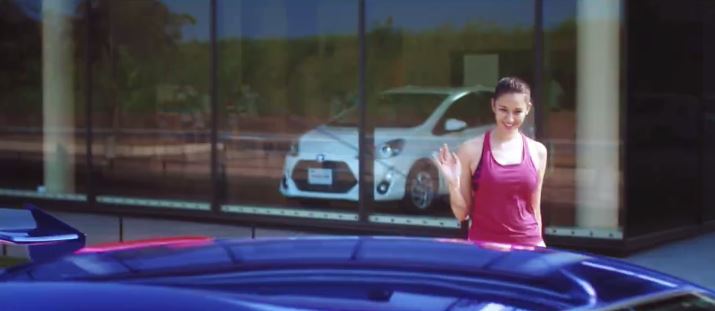
My ideal customer is a young (college-age) woman who enjoys spending time in places like Starbucks. This avatar likes to eat out, and orders drinks that often includes straws. The avatar is typically eco-conscious, so they ideally would drive a Prius (or similar electric car), and white seems to be the most popular Prius color. This avatar would likely not have kids, and be more willing to spend money on non-necessities. This avatar's favorite politicians are usually more liberal, as they care about environmental issues.
I would definitely have some in common with the created avatar. I chose the product "MetalliStraw" because I am eco-conscious and concerned about the future of the environment. While I do not currently drive an electric car, it is certainly something I would like to in the future. I also own a white car, which may subconsciously why I chose the avatar to have a white car. I am generally more liberal as well, which aligns with my interest in protecting and cleaning up the planet.
17 - Elevator Pitch No. 2
My peers both mentioned that I had forgot to include or mention a price in my first elevator pitch. One also mentioned that I should try to touch on consumers' empathy towards the environment.
I tried to accomplish both of these things by giving my product a $12.98 price, as well as speaking more onto the potential environmental damage a consumer is doing by not purchasing my product.
Friday, October 19, 2018
16 - What's Your Secret Sauce?
1)
Loyalty - I am dedicated to holding my word and always being there for those who are there for me
Empathy - I do my best to "put myself in another's shoes" and try to understand their perspective and why they feel that way.
Logical - I tend to approach things from a very data and fact-based perspective.
Experience Selling - I've worked for multiple years selling tech devices on the floor by conversing with customers, understanding their needs, and recommending the best solution.
Genuineness - For better or worse, I am not good at lying. I like to be honest and straight forward with everyone I meet, which is important to developing strong relationships in business and life in general.
2) Unfortunately, I conducted the 5 interviews, taking notes on pad and paper, without realizing the conversations needed to be recorded. Some of the interviews were done over phone, while some were done in person.
I spoke to my girlfriend, a few friends, as well as my parents. They did speak on my loyalty; that they all felt I would always be there for them need be. They all discussed that I'm very caring and good at taking others into consideration at all times. A few commented on my good posture, combined with my height, and how it helps me be presentable. My dad reminded my that I am a certified Cricket cell phone dealer, which gave me hands-on experience selling a specific product and service to a specific market segment.
3)
Others often tell me I seem confident, which is certainly not always how I feel. As someone who has struggled with insecurity and social anxieties, it was interesting to hear that most people don't perceive those things from me. My perceptions are more mental, and not outwardly projected. I generally am not one to brag or believe that I'm special in anyway, but my friends and family highlighted the things that make me unique, which I believe I should focus on to become a more complete and whole me.
15 - Figuring Out Buyer Behavior Pt. 2
I evaluated three more students this week. All of the students identified as frequent straw users.
Upon questioning them about alternatives, I learned a lot. While many see the need to reduce plastic straw use, many simply choose not to purchase any straw to reduce pollution. When I questioned them about plastic straws and reusable straws in comparison, I discovered that the higher price of the variety of reusable straws is often a deterrent to consumers, even though the straws can be reused. In a similar way, these consumers agreed that the physical appearance of a hundred pack of straws for a low price, compared to one reusable straw for a higher price, gives the perception that the plastic straws are a better value. All three agreed that paper or cardboard straws were less desirable as they tend to become soggy over time. Price and visual appearance seemed to be the most important attributes among the interviewees. While two of them agreed that quality was important to them, they had difficulty determining quality or comparing in-store with the products in packaging.
The group of students agreed that since straws are pretty standard day-to-day items, they usually purchase them from a grocery store. Most grocery stores don't sell reusable straws; usually they must be purchased and ordered online. Due to thinking of straws as a grocery item, this barrier causes many to lose interest in taking time to order something as simple as a straw. Because it is a fairly low-cost product, most preferred paying in cash, unless it was purchased with the rest of their groceries, in which credit was preferred.
The interviewees gave very interesting replies to how, or if at all, they evaluate their purchase afterwards. When purchasing plastic straws, that have a one-time use, most never thought about the purchase afterwards, but simply continued to use and throw away the product. However, when asked about reusable straws, their answers were different. Many were happier with the decision to purchase a reusable straw, rather than having little opinion post-purchasing plastic straws. The interviewees explained that whenever they use their reusable straw, they remember the action they are taking to help the planet, which in turn better satisfies their purchasing decision.
In conclusion, the main alternative in this segment is going to be either regular plastic straws, or not using one at all. Most people put little thought into purchasing straws, and end up just getting the most readily available ones. While consumers generally don't experience post-purchase dissonance from plastic straws, they do seem happier in their post-purchase evaluation of reusable straws.
Friday, October 12, 2018
14A - Halfway Reflection
1) It's important to stay on top of the Canvas calendar, and keep track of EVERY assignment, blog post, and quiz that could be due. Making a ritual of checking the calendar every morning has ensured that I stay on track and don't get behind in ENT3003.
2) There has certainly been times this semester where stress has set in and I've felt like giving up. A specific example is the week of Career Showcase. With my future career in mind, I had completely forgone worrying about assignments and let them pile up in ENT3003 and other courses. After that week, I've become better at organizing my time, as well as planning for upcoming events outside of the classroom. By being ahead on my assignments, stress is greatly reduced when there is outside events like Career Showcase.
3) If I had to compile three tips for a future student, I would say,
- Don't get behind. Stay several days ahead on coursework, and in case of emergency or outside conflicts, there will still always be time to make up that work before it is due.
- Create a schedule. Dedicated a particular "period" or hour slot certain days of the week solely for ENT3003. It has to be finished sometime, and between two classes midday is much better than at 11:55PM after a long day of work.
- Use all your resources. Most of the coursework is not difficult if you're diligent about making use of all class lectures, readings, as well as UF libraries and more. These tools are there for us to succeed, it's only logical to make use of them.
13A - Reading Reflection No. 1
I read about Muhammad Yunus
1) I had personally not heard of Yunus prior to this reading. I was extremely surprised as to the impact Yunus has had on economics, specifically microcredit and micro-lending. The thing I most admired about him was his pure drive to succeed as well as his desire to help others. As someone who struggles with motivation sometimes, Yunus' dedication to success, for not just himself but his people, is very admirable. There was very little about his story that I did not admire. Yunus certainly dealt with hardship and overcame difficulties. From being born in a less than prosperous family and community, to his mother's illness when he was very young, he has constantly overcame hardship. While attempting to create a foundation for microcredit in Bangladesh, he experienced conflict from many political and cultural sides for his pursuit to change socio-economic standards.
2) Yunus took the concept of lending and made it more accessible on a much smaller scale. Throughout his career, he displayed knowledge of his target market, understanding of risk and repayment, as well as being able to successfully pitch microcreditting to Bangladesh's national bank. Later, Yunus would horizontally segment his business interests, creating separate SBU's such as the Grameen Fishing Foundation and the Grameen Agriculture Foundation.
3) Some of Yunus' education, as well as Bangladeshi banking holding different economic and cultural values and structure compared to the United States. It was surprising that the national bank, prior to Yunus' work, didn't aid poorer citizens.
4) If I could ask Yunus two questions I would ask,
When did you realize you had a passion for economics or what pushed you in the direction of studying economics?
- As someone born in the U.S., business and associated degrees are heavily emphasized, which is why I felt I naturally fit into this study. During Yunus' youth, earning a degree wasn't as standard and expected, making me wonder what peaked Yunus' interest into further education.
Do you feel that your studying in the United States made a significant impact versus had you studied else for your PhD?
- Degrees from the United States may arbitrarily hold more face-value than some countries. I wonder if studying in the United States presented him with more opportunities than his home country.
5) I believe to Yunus, hard work is achieving success not only for yourself but for your community and family- Doing your best for the betterment of all. Yunus always strove to challenge himself, without every forgetting his origin and home. I do share the belief that success should be shared, not for just one's own personal gain.
Thursday, October 4, 2018
12A - Figuring Out Buyer Behavior No. 1
Segment - Young students who live in U.S. coastal regions.
I interviewed three students from the University of Florida. All three agreed that plastic straws do pose a problem today. They all mentioned various places where they encounter this need; typically at restaurants, with one also being a straw-user at home. They all found that this need is usually encountered once or more per day. As I presented them with some data of the increasing issues of plastic pollution, two of them mentioned that the future of this need will increase.
One student said that to solve this need they had already tried reusable straws in the past, and found them annoying as they would get dirty or sticky, and they would be unable to clean the inside. The other two mentioned that they would simply choose to use straws less at home and in restaurants. I asked if they had ever sought to fill that need before, and two of them had searched online, the one having purchased a different reusable straw. It seemed that no company provided them with a full explanation of the importance of the product, as well as it often being highly priced in comparison to plastic straws.
I would describe this market segment of younger students as generally uninformed but passionate about solving environmental concerns. It seems the largest problem is market penetration and actually informing these students of how much an impact using reusable versus plastic straws can make. I would emphasize the words "reusable", "metal straw", and "plastic waste solutions" based on the responses of the interviewees.
11A - Idea Napkin No. 1
1) You.
My name is Steven Perdue. I (will) hold a bachelor of science in Food and Resource Economics. As a Florida native, I've always greatly valued our oceans and environment. I see the future of the Metalli-Straw as the future of Florida's clean waters.
2) What are you offering to customers?
A metallic straw, that comes with a helpful cleaning brush, and is entirely reusable and washable. The product also comes with a booklet insert to inform just how Metalli-Straw makes an impact on our environment.
3) Who are you offering it to?
Generally, I would like to put this product in everyone's hands. Our target market is typically younger consumers, particularly students. More specifically, our product targets this demographic within coastal regions, where plastic pollution is more readily visible.
4) Why do they care?
Plastic straws continue to be produced and continue to damage the environment and the oceans. Metalli-Straw offers an alternative that is reusable, and works to eliminate the need for plastic straws. The Metalli-Straw can be used for a lifetime; a single purchase rather than needing to repurchase hundreds and thousands of straws. The customer will be helping the planet, while also making a smart financial investment for the long term.
5) What are your core competencies?
While there have been other reusable straws in the past, we aim to make your commitment to the environment as simple as possible. Where some straws fail in ease of cleaning, we have included a brush to clean the inside of Metalli-Straw, as well as made it completely dish-washer safe. Not only do we provide a product to promote the health of the environment, but we have done our research. Our updated booklet insert with every product will provide data for the current state of pollution and plastic-use, as well as Metalli-Straw's impact on that data. In this way we provide a unique product to our customers.
Wednesday, September 26, 2018
9A - Testing the Hypothesis, Part 2
Hypothesis:
Plastic Straws can be replaced by reusable metal ones, or done away with altogether.
Who:
It was difficult finding people, or any kind of common group of people, who are not effected by this opportunity. People who felt they did not have any need for reusable straws, or did not care to do away with plastic straws, typically were people who were either uneducated about the dangers plastic straws cause, or they simply do not value to environment or wildlife as highly as consumer comfort. The reasoning behind people not caring usually had to do with their core values or political beliefs/positioning.
What:
Some of the interviewees that did not know or did not care much about this opportunity questioned why the focus was on straws; why wasn't I interested in all sorts of plastic waste and pollution? In my opinion this is the clear split of this need compared to another. Plastic straws are not a completely necessary product, like some other plastic products, and it seems to be one of the easiest to eliminate, but still has one of the largest impacts on pollution.
Why:
I believe that the underlying need is not necessarily different. Many are simply unaware of how important of a need it is, and how dependent their future may be on this opportunity. Whether it was due to lack of knowledge, or not valuing the environment, it didn't seem that the need didn't exist, but rather non-supporters were simply unaware of the need and how important it is.
|
Inside the Boundary
|
Outside the Boundary
|
|
Most consumers
|
Uninformed consumers, anti-environmentalists
|
|
To eliminate plastic straw waste
|
Not trying to eliminate all plastic waste, or
increase metal straw waste
|
|
Plastic straws are extremely damaging to the
environment
|
These consumers need to be given more info and helped
to understand why this need affects them.
|
Subscribe to:
Posts (Atom)